11 Days Before Claude Mythos Was Restricted, a Chinese Cybersecurity Firm Released a Similar AI Capability
On April 7, Anthropic made a rare disclosure about an internal model called Claude Mythos Preview. According to the company, the model demonstrated a significant advance in vulnerability discovery and exploitation capabilities. Deemed capable of posing systemic risks to highly sensitive network environments—such as financial systems and critical infrastructure—the model was effectively isolated through a series of containment measures.
The news sent shockwaves through the security industry. Not just because of Mythos itself, but because it turned a previously theoretical risk into a stark, symbolic reality: AI that can autonomously discover vulnerabilities, construct exploit chains, and execute attack loops is no longer a lab concept—it is no longer merely theoretical — it is becoming operationally viable.
But rewind the clock just 11 days, and another signal emerges.
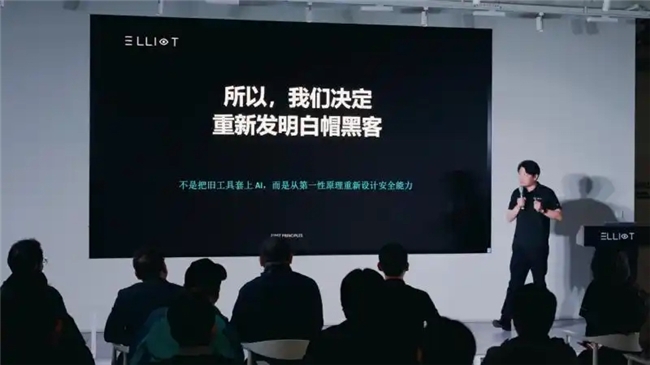
On March 27, the Chinese cybersecurity firm BUGBANK (Moule Technology) publicly released its AI red-team agent, Elliot. Based on its official description, Elliot pursues a technical path closely aligned with what made Mythos so alarming to the industry: it is no longer satisfied with “assisted analysis” or “tool calling.” Instead, it aims to weave vulnerability identification, attack reasoning, exploit validation, and execution into a fully automated closed-loop process.
In other words, just as the global industry was debating the risks of Mythos, a Chinese company had already moved a similar capability into public deployment.
The Real Story Isn’t the Containment—It’s That the Path Has Been Validated
From an industry perspective, the significance of Mythos lies not in the fact that a dangerous model was contained, but in the confirmation that AI’s offensive capability is approaching a threshold that most have been unwilling to acknowledge.
For years, conversations around AI in security focused on defensive efficiency: assisted analysis, log inspection, alert noise reduction, rule generation. Even when offense came up, it was framed as “improving security researcher productivity” or “automating existing tools.” But systems like Mythos and Elliot represent something different. They are not merely productivity tools — they represent a new class of autonomous offensive systems.
What they share is a goal that goes beyond answering “is there a vulnerability here?” They aim to answer:
Is this anomaly actually exploitable?
-
Can it be exploited further?
-
Can it be chained into a longer attack sequence?
-
Under what conditions can it be reliably reproduced?
-
How do we produce an executable attack path?
This means AI is moving from being a “security assistant” to becoming an autonomous participant in cyber offense and defense. That’s a qualitative shift, not just a performance upgrade.
Two Paths: Seal the Risk, or Deploy the Capability on Defense
The difference between Mythos and Elliot is not so much about direction as it is about response.
Anthropic’s logic was essentially risk containment. When a model has strong offensive potential and societal guardrails are not yet in place, the safest option is physical isolation, delayed release, and minimized exposure.
Elliot represents a different path: if offensive AI is inevitable, then defenders must acquire equivalent capabilities as quickly as possible. Rather than “sealing a model,” this approach emphasizes bringing similar technology under controlled frameworks and transforming it into defensive capabilities—continuous testing, simulation, and adversarial validation.
According to BUGBANK, Elliot is not released as an open offensive tool. It is packaged as an AI red-team agent, constrained by sandboxes, secure gateways, and controllable boundaries. The logic is not to encourage capability proliferation, but to give defenders an automated adversary that can persistently stress-test and verify their own defenses.
This reflects a real-world split: faced with the same capability, do you prioritize limiting its emergence, or ensuring defenders get it first?
Neither approach obsoletes the other. They represent different choices shaped by different markets and institutional conditions.
What the “11-Day Gap” Reveals About the Changing Tempo
In the past, moving from lab validation to engineered product to public release took a long time. In security especially, technologies that enter real-world combat environments typically go through extensive conservative evaluation.
But AI red-team technology is different. it’s a stack of large language models, automated orchestration, vulnerability validation, toolchain scheduling, and sandbox controls. Once those foundational pieces mature simultaneously, engineering velocity can far outpace traditional security product cycles.
That’s why Mythos caused such a shock. The industry suddenly realized that the real question is no longer “can AI do offense?” but rather: when it already can, and when different organizations are already implementing it in different ways—how do rules, markets, and defense systems keep up?
In that sense, Elliot’s early release is a signal: AI red-team has moved beyond proof-of-concept and entered the early stage of productization and real-world deployment.
For Defenders, the Bigger Problem Is Just Beginning
If Mythos brought industry risk perception to the forefront, Elliot presents a more immediate question: is enterprise security ready for machine-on-machine combat?
Most enterprise security today is still built on the assumption that humans are the primary units of attack and defense: attack frequency is limited, chains are relatively interpretable, and remediation windows are negotiable. But when attack closed loops are compressed by AI, defenses that rely on manual discovery, manual verification, and manual response will increasingly fall behind.
That’s why more and more industry insiders frame the future of security as a battle between “bad AI” and “good AI.” In such an environment, simply throwing people, rules, and processes at the problem may no longer offset the speed advantage gained by attackers.
From this perspective, whether Mythos is being isolated or Elliot is being deployed, both point to the same industry imperative: when AI can independently approach full attack chains, defenders must have equivalent automated validation capabilities—otherwise, security systems will be structurally outpaced.
Closing Thoughts
The Mythos affair gave the industry a dramatic glimpse of the risk boundaries of offensive AI. Elliot shows something else: that same technical path is already being engineered, productized, and actively deployed on the defensive side.
Sealing one model cannot seal an era.
What really needs to be understood is that the security industry has entered a new phase. AI is no longer just a tool that assists security work—it is becoming a core force that both attackers and defenders must contend with.
The critical question going forward may no longer be “should we accept AI red-team?” but rather: who will first build the systems capable of controlling, deploying, and countering such capabilities?